Plant-owned lifecycle
Implement, retrain, redeploy, and repeat largely with your own teams.
Implement, retrain, redeploy, and repeat largely with your own teams.
Add unlimited use cases without high per-use-case costs.
Expand without a mandatory proprietary camera or edge-device stack.
What does self-service Vision AI mean?
The plant keeps control. Capture, train, deploy, update, and extend inspections as production changes, with implementation support available when needed.
Plant-owned inspection workflow
Collect representative images where the quality challenge occurs.
Plant experts identify the product, region, defect, severity, and decision.
Turn real production examples into a customer-specific inspection model.
Run the trained model on an edge device of your choice for real-time detection.
Add or retire defect classes, retrain, redeploy, and move to the next inspection.
Implementation support remains available when needed. Plant teams simply do not have to return to an outside specialist for every inspection change.
Why Vision AI works
Effective for a defined inspection, but a new product, defect, or visual condition can trigger another engineered project and maintenance dependency.
Models learn from labeled line images and can be retrained as products, processes, and quality definitions change.
Plant-controlled training and retraining, supported edge deployment, hardware freedom, and one factory price make repeatable expansion practical.
Vision AI makes adaptable inspection possible. United Vision gives the plant the control and economics to keep extending it.
Inspection capabilities
From visible surface flaws to hidden inclusions, identification, assembly, movement, and safety, United Vision gives plant teams a consistent way to turn camera evidence into operating decisions.

Find scratches, dents, cracks, stains, weld flaws, internal voids, porosity, and foreign objects.

Measure lengths, gaps, radii, hole positions, and tolerance bands without contact.

Read printed, etched, embossed, and dot-peened serial numbers, date codes, and lot IDs.

Confirm that required components are present, correctly placed, and properly oriented.

Validate the label, inspect print quality, and read 1D, QR, and DataMatrix codes.

Establish a visual baseline from good parts and flag deviations that do not belong.
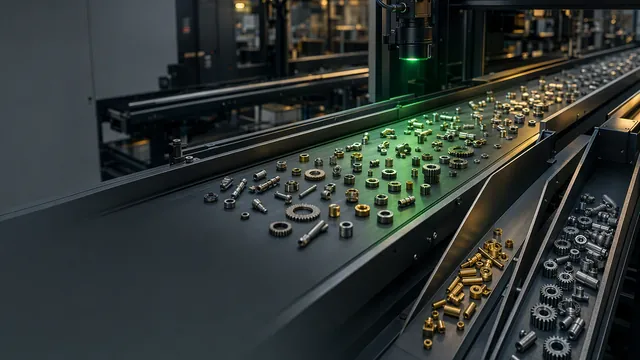
Count and classify mixed parts, then connect the decision to the configured sort or reject path.
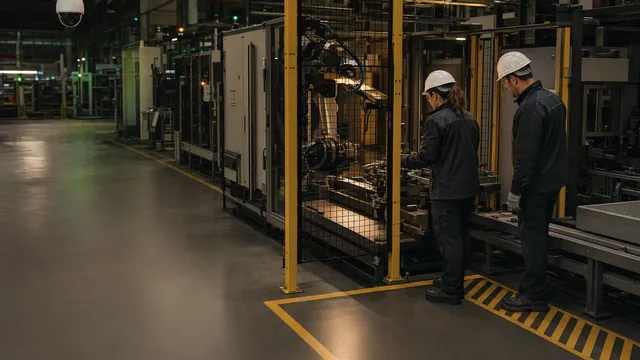
Monitor restricted zones, PPE, and the sequence of critical process steps.
Inspection loop
The camera supplies the frame. The plant expert defines what matters. United Vision carries that decision to the edge and makes feedback part of the next improvement.
Capture
Start with production evidence from the line and condition where the inspection needs to work.
Define
The people closest to the work define what the inspection needs to recognize and how the result should be used.
Train
Use representative visual evidence to train and refine the inspection for the actual production condition.
Deploy
Bring the trained inspection back to the line so incoming images can support the configured operating response.
Adapt and repeat
Keep the inspection current as products and conditions change, then apply the same plant-owned workflow to another use case.
Platform


Use cases
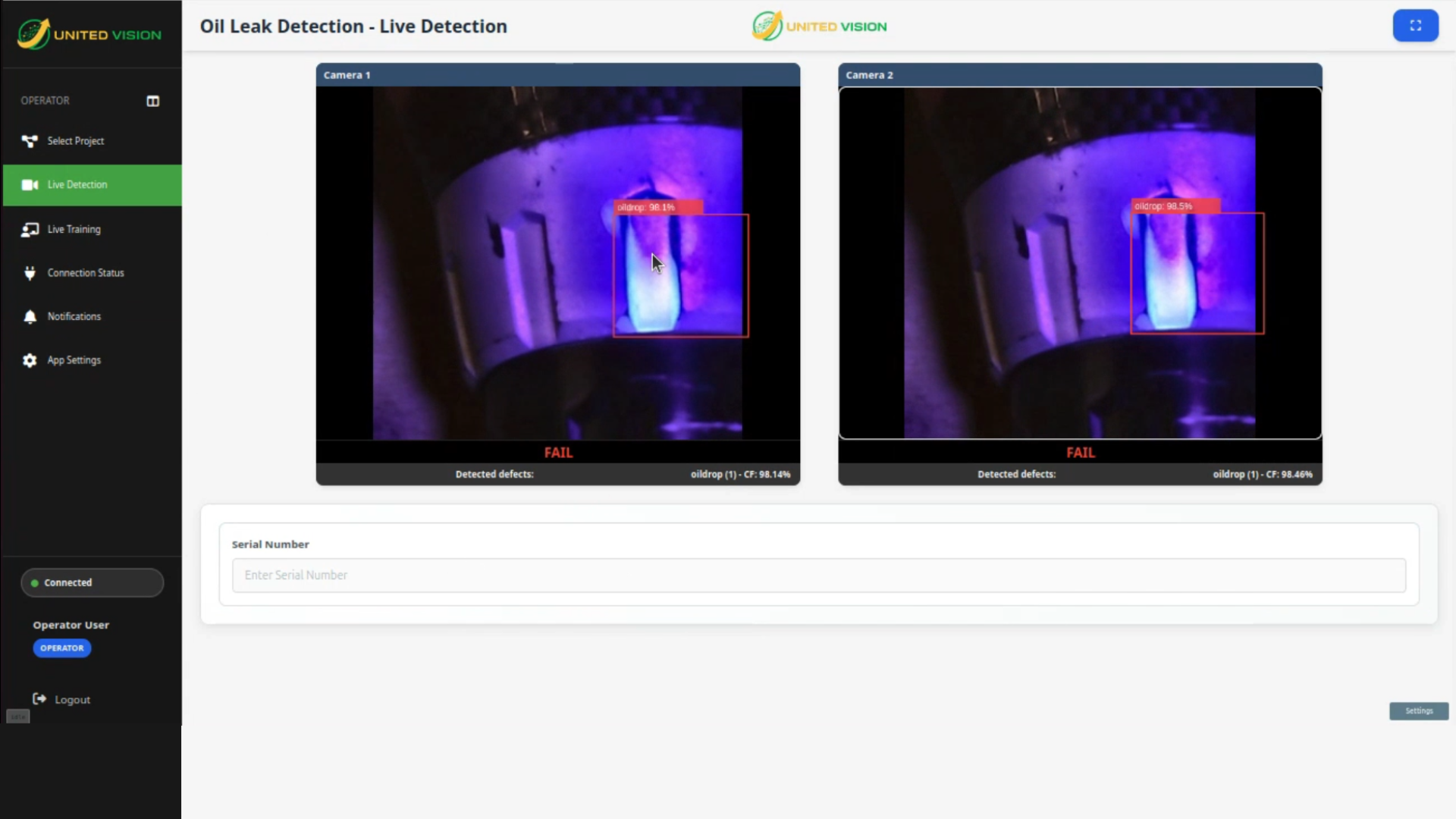
Each film connects the physical event on the line to the United Vision session that evaluates it—from waiting for the product through the final operating decision.
Oil-leak detection
Your IP
Plant-floor images and customer-specific inspection work developed with United Vision remain with the customer. BCD iLabs does not use customer IP to train or improve shared, general, or third-party AI models.
Insights

Operations

Economics

Plant ownership
FAQ
Direct answers about manufacturing inspection, self-service, cameras, deployment, factory licensing, and customer ownership.
AI visual inspection uses models trained on representative production images to identify defined defects, conditions, objects, measurements, text, or anomalies. It can support manufacturing quality checks where visual conditions vary, while plant teams remain responsible for defining, validating, and acting on the inspection.
United Vision is BCD iLabs’ plant-owned Vision AI platform for manufacturing quality inspection. It gives plant teams a repeatable way to capture, train, deploy, update, and expand inspection models.
United Vision gives plant teams control of the inspection-model lifecycle and supports unlimited use cases under one factory license. Teams can capture examples, train, deploy, update, and repeat without making every new inspection another United Vision software purchase or specialist-led model project.
Plant teams can control the working model lifecycle largely on their own: capture production examples, define and train the inspection, deploy it to an edge device of your choice, retrain it as conditions change, and repeat the process for additional use cases. Implementation support remains available when needed.
United Vision supports bring-your-own cameras and edge devices where the image quality, interfaces, production conditions, and inspection requirements are appropriate. Each use case is evaluated against the actual environment; compatibility is not universal.
A factory license supports unlimited United Vision use cases within that factory, removing a new United Vision software charge for each additional inspection. Current scope and commercial terms are confirmed for the specific deployment.
No. Camera placement, lighting, integration, validation, and operational response still need to fit the use case. Self-service means the plant is not forced to depend on an outside specialist for every model change or new inspection.
The current capability set includes surface and X-ray inspection, dimensional gauging, OCR and character reading, assembly and presence checks, label and barcode verification, anomaly detection, count and sort workflows, and configured safety monitoring.
The customer does. Plant-floor images and customer-specific inspection work developed with United Vision remain with the customer.
Start with a high-value inspection where the condition, visual evidence, and operating response can be clearly defined. Prove that workflow, then decide where expansion makes sense.
Move one use case forward
Bring us the defect, line condition, available cameras, and operating response that matter. We’ll help map a practical path from known opportunity to working visual inspection.